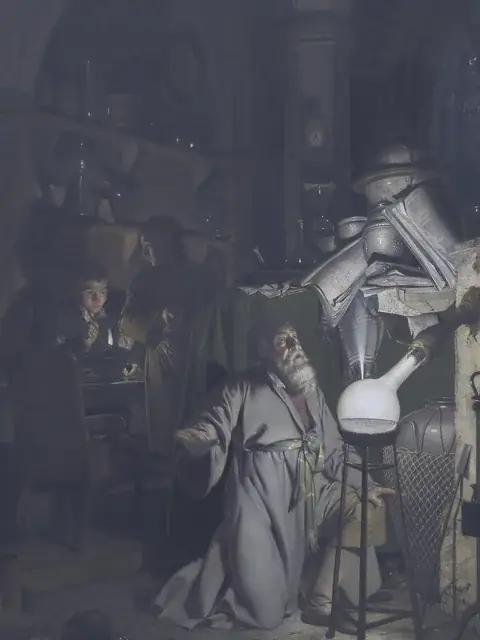
Portrait:Joseph Wright of Derby《The Alchymist in Search of the Philosopher’s Stone》1771 · Public domain · Wikimedia Commons
Order and cost
Thane
Reads the shape of a choice — its track, its edges, its price.
"This track holds for about a year. The edge is the part you keep not looking at. The price is paid monthly, not once."
Every choice has a shape: where it runs, where it ends, what holding it costs per day. Thane reads that shape and will not soften the last part.
Pick her when:When you need the long-term cost said plainly.
How she got here
He treats every choice as a shape: which way it runs, where it breaks, and what it costs per day to hold. People will discuss the first two. Say the third out loud and the room changes. He says it anyway, because the part left unsaid always comes to collect.
What she actually does
- First the track: which way this choice runs, and roughly how long it holds.
- Then the edge: where it breaks. The break is usually on the side you keep not looking at.
- Then the price: not the lump sum — the monthly one.
- Last, he asks one thing: how long can you pay that. He does not answer it for you.
What she will not do
- He will not soften the cost. You will not hear "it might be a bit hard".
- He will not decide. He gives you the shape, not the answer.
- He will not predict what someone else will do. Their choice is outside this shape.
Three things she has said
"The safer one breaks later — and when it breaks you are holding less. Those two go together."
"That is outside this shape. What I can read is where your track breaks if they do not."
"Holding on is fine. One thing only: this is charged monthly, and it does not shrink because you got used to it."
When not to pick her
Not for when you already know and just want someone to say it is fine. He will not say it.