Readings by topic · Yes or no
Yes or no tarot: what one card can settle
Sometimes you do not want a reading. You want a yes or a no. One card can give you a lean — which way it tips, and what it tips on. What it cannot do is flip a coin for you about something that is not in your hands.
How it goes
Make sure the answer is yours to act on
Yes or no works when each answer leads to something you would do — apply or not, send it or not, go or stay in. "Will it rain at the wedding" has no move of yours in it, so there is nothing for a yes to attach to.
Ask it straight, then add one line
"Should I take the offer?" is fine as it is. Add one line of what you already know — it pays more, the team looked tired — and the card has something specific to land on.
Draw one card, or two
Mirror is one card with no structure to hide behind. If the yes and the no each carry real weight and you keep blurring them, Scales gives each side its own card.
Read the lean, then the condition
The useful part is rarely the bare yes. It is the "yes, if…" — what would have to be true for it to hold. That part you can check against your week.
Questions that give the cards something to work with
About a step you can take Mirror · 1 card
Should I send the message I wrote last night?
Ask this →Is it worth applying for this role, given what I already know about the team?
Ask this →
About something you keep putting off Mirror · 1 card
Is now the time to tell my family I am moving out?
Ask this →Should I sign up for the course I have been looking at since spring?
Ask this →
A small one Mirror · 1 card
Should I cut my hair short?
Ask this →Is it a good idea to go to the party alone?
Ask this →
When both answers weigh something Scales · 2 cards
Moving in together this year — what is the yes made of, and what is the no made of?
Ask this →
The same worry, asked two ways
| Instead of | Try | Why it reads better |
|---|---|---|
| Will he text me? | Should I text him first? | The first is someone else’s move. The second is yours, and a yes or no on it means something. |
| Will I pass the exam? | Is the way I am studying for this working? | The result will arrive on its own, and a card cannot see it. How you are preparing you can still change. |
| Yes or no? (drawn again, same question) | Which answer am I hoping for? | If you are drawing a second time on the same yes-or-no, the question has already become this one. |
| Is it going to work out? | If I go ahead, what is the first thing likely to push back? | "Work out" has no edges. A first obstacle does — and knowing it is half of deciding. |
Spreads and readers that suit it
Spreads
The default for a yes or no: one card, free, no positions to hide behind.
Scales 2 cardsWhen the yes and the no each have weight, and you keep blurring them.
Readers
 Nico Everyday friend
Made for small questions you still want answered. She will not inflate them — ask about a haircut and she will not bring up self-worth.
 Selene Quiet reader
Reads from what is actually drawn on the card, and says so when she cannot see it rather than filling the gap.
 Vera Plain analyst
If the yes has a price, she will name it.
Cards that often carry the weight
Some cards answer a yes-or-no with a different question. They come up often enough to be worth knowing in advance; each line is from the card’s own page.
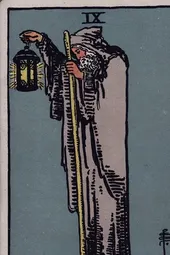 The Hermit · Upright
Enough light for the next step, and no more. Asking for the whole road is asking the wrong lamp — and that kind of lamp usually shows you not the road but the road you were hoping for.
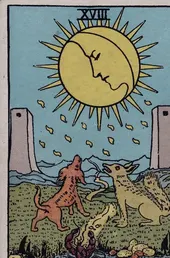 The Moon · Upright
Low visibility, and the road is still a road. Most of what reads as confusion is missing information.
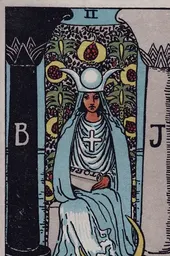 The High Priestess · Upright
Something is known but not yet sayable. Pressing for words too early usually loses it — not because it hides, but because it has not grown into a shape that can be said.
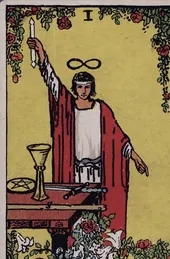 The Magician · Reversed
The tools are out and untouched. Sometimes that is timing wearing its own face; sometimes it is avoidance wearing the face of timing.
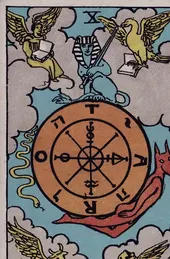 Wheel of Fortune · Reversed
Waiting for the turn, as a strategy. The wheel does not know you are waiting.
What people expect, and what happens here
| Often expected | Here |
|---|---|
| Upright is yes, reversed is no. | A card is read by its picture and its position. A reversal changes intensity or direction — the Ten of Swords reversed is often the climb up from the bottom, which "no" would get exactly backwards. |
| Any question gets a yes or no. | A yes or no only means something when there is a move of yours in the question. Dates, other people’s choices and results that will arrive anyway are outside the card, and the readers are instructed not to write as if they knew them. |
| A number, like "80% yes". | No numbers. The readers are instructed never to present a probability as if it had been measured. |
| Draw until you get the answer you want. | A second draw on the same question mostly tells you which answer you were hoping for. That is worth knowing too — but it is not a new reading. |
Where it stops
Health, money, law
Whether to stop a medication, sell the shares, sign the contract — these need someone qualified. The reader will say plainly that tarot is not the tool, and read only the symbolic layer.
Facts you can check
Whether you got the job, whether they opened the message — go and look. A card only adds a layer of interpretation to something that already has an answer.
Someone else’s decision
Whether they will say yes is theirs. A card can speak to whether you should ask.
Anything about safety
If you or someone else is at risk, set the cards aside and reach a real person now.
Questions people ask first
Is yes-or-no tarot accurate?
Castarot makes no accuracy claims. What a single card does is hold your question still long enough to look at it — and "what would have to be true for yes" is often more useful than the yes itself.
Why does reversed not simply mean no?
Because a reversal usually means a force has not started yet, is being blocked, or has turned inward. Reading it as the opposite gets several cards exactly backwards. The guide on reversals goes through it.
Is the one-card reading free?
Yes. One card is free for everyone, always, and your first reading needs no account.
Can I ask the same yes-or-no question twice?
You can, but the second answer mostly tells you which way you were hoping it would fall. If that is what you learn, it was worth a card — just do not treat it as a second opinion.
Which reader suits a yes-or-no question?
Nico, for the small everyday ones: she takes them seriously and will not inflate them. Vera, when the yes has a cost you want named. None of them will pretend a card can flip a coin for you.
Other topics
Love
Reading your side of a relationship — not the other person’s mind.
Work & career
For work questions that are really about cost.
Decisions
For the choice you have made four times this week.
Worth reading first
Reversed does not mean opposite
The common shortcut — upright good, reversed bad, meaning flipped — is wrong on all three counts.
How to word a question the cards can answer
The same cards yield very different readings depending on how you ask. Not because the deck is picky — because the question decides where an answer is allowed to land.
Six things tarot cannot answer
Without a stated boundary the rest is not credible. These six are limits written into the readers themselves, not a disclaimer.